
How can Inconel be drilled without breaking the drill?
Drilling Inconel (e.g. 718 or 625) is one of the most difficult machining operations. The material retains its mechanical strength at very high temperatures and work hardens aggressively. To avoid drill breakage, the operation should be treated more like milling than drilling: constant, decisive feed, low Vc (20-30 m/min), and a large amount of coolant. Failure typically occurs because of excessive margin wear leading to seizure, or because of heat-induced chipping.
Which drill is best suited for drilling Inconel without breakage?
An “Inconel-ready” drill should have:
- Substrate: Ultra-fine, high-toughness carbide able to withstand thermal shocks.
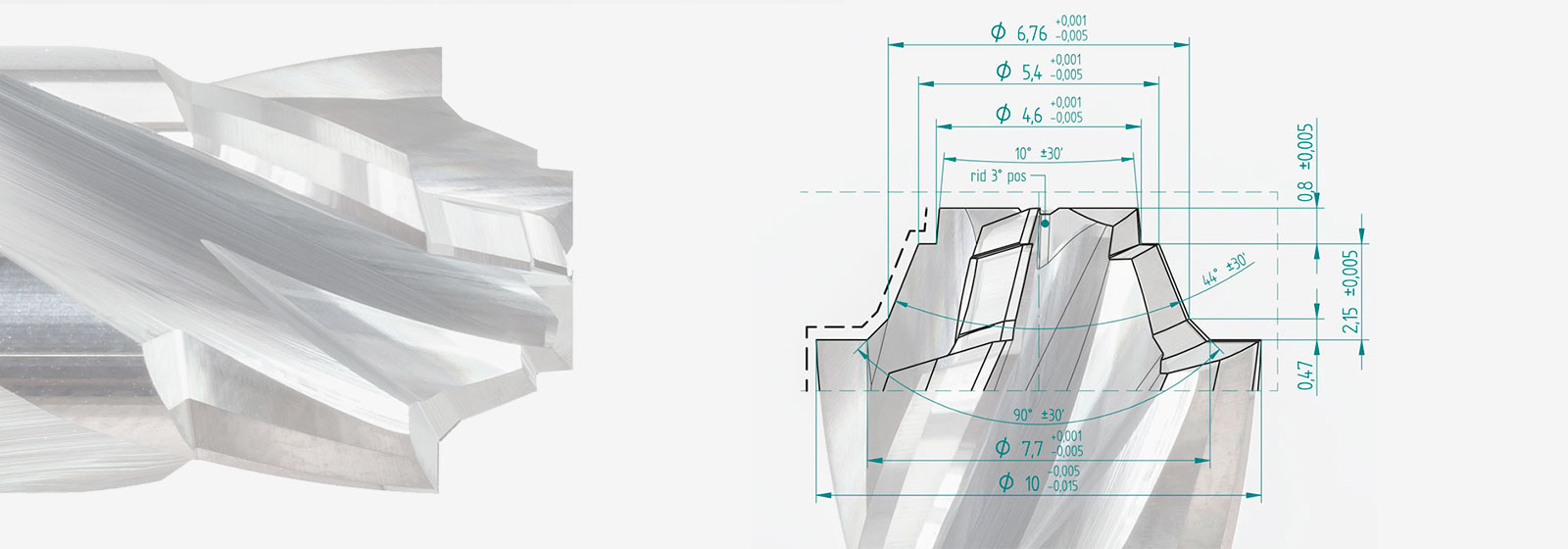
- Design: 140° point angle, high helix (30°+) to remove heat quickly with the chip, and reinforced margins (double margin) for stability in the hole.
- Coating: Thick AlTiN or AlTiSiN coatings specifically designed for superalloys.
How should speed and feed be set when drilling Inconel?
The balance is delicate:
- Cutting Speed (Vc): Very conservative, 25-35 m/min. Increasing Vc drastically reduces tool life (Taylor’s equation).
- Feed (fn): Must be high enough to cut below the layer work-hardened by the previous engagement (0.05-0.10 mm/rev). Feed that is too low polishes the material and destroys the drill.
- Dwell: Never, under any circumstances, let the drill dwell in the hole (Dwell = 0).
How should chip evacuation be managed when drilling Inconel?
The chip is the heat carrier:
- High Pressure: 70 bar through the tool is standard. The jet breaks the chip and lubricates the cut.
- Pecking: Avoid if possible because every re-entry risks work hardening. If necessary, retract quickly and re-engage decisively.
- Wear Analysis: Monitor the margin. If wear exceeds 0.2 mm, change the tool before it seizes or welds in the hole.