
How can clean holes be produced in 316 stainless steel?
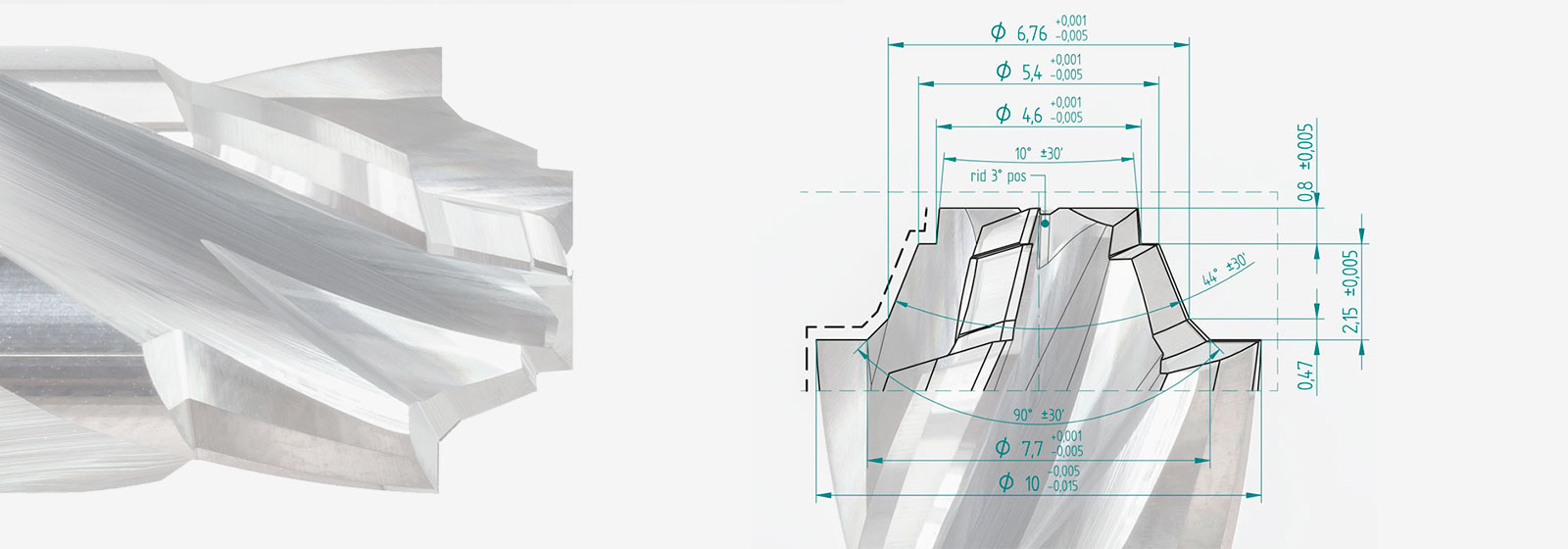
AISI 316 (and 316L) stainless steel is particularly gummy and tough. Producing clean holes means managing material adhesion to the cutting edges (BUE). A drill with built-up edge tears the surface instead of cutting it. It is therefore essential to use drills with low-friction coatings (such as advanced TiAlN or AlCrN) and a sharp cutting geometry (clear positive rake) that “slices” the material without compressing it excessively.
How can burrs be avoided when drilling 316 stainless steel?
Anti-burr geometry:
- Point Angle: 140° is preferable to 118°. A flatter point angle reduces exit burr height by distributing thrust across a larger radial area.
- Grinding: Web thinning should be pronounced to reduce central thrust force.
Which drill geometry improves hole quality in stainless steel?
Hole quality vs. parameters:
- Deviation: To avoid “banana-shaped” holes, use short drills (3xD) or make a rigid pilot hole first.
- Ovality: Often caused by unstable entry. Entering at low rpm (500 rpm) and switching on speed/coolant 2 mm from the part is not ideal for modern solid-carbide drills; it is better to enter at operating speed with feed reduced by 50% for the first 1xD.
How can hole ovality and deviation be reduced in 316 stainless steel?
Typical defects in 316:
- Rough Surface: A sign of feed that is too low (rubbing) or excessive run-out.
- Work-Hardened Wall: If the hole “whistles”, the surface has work hardened. Replace the drill: a worn cutting edge on 316 is unforgiving.