
How can stability in plunge milling be improved?
Plunge Milling is one of the most stable roughing strategies for machining with long overhangs (> 4-5xD) or deep cavities. Instead of cutting radially, where the cutter bends like a lever, cutting takes place along the Z axis. Forces are transferred directly through the spindle into the machine column, where rigidity is highest. It is ideal for clearing deep pockets in tough materials while minimizing vibration.
When is plunge milling recommended in CNC machining?
When to use it:
- Unstable Vibration: When side milling produces chatter that cannot be eliminated because of tool length.
- Older Machines: On machines with poor radial spindle rigidity (e.g. older ISO 40 tapers), plunge milling allows heavy material removal by exploiting axial compression.
- Deep Corners: To remove material in corners where a large cutter cannot reach.
Which end mill should be selected for highly stable plunge milling?
The right tool:
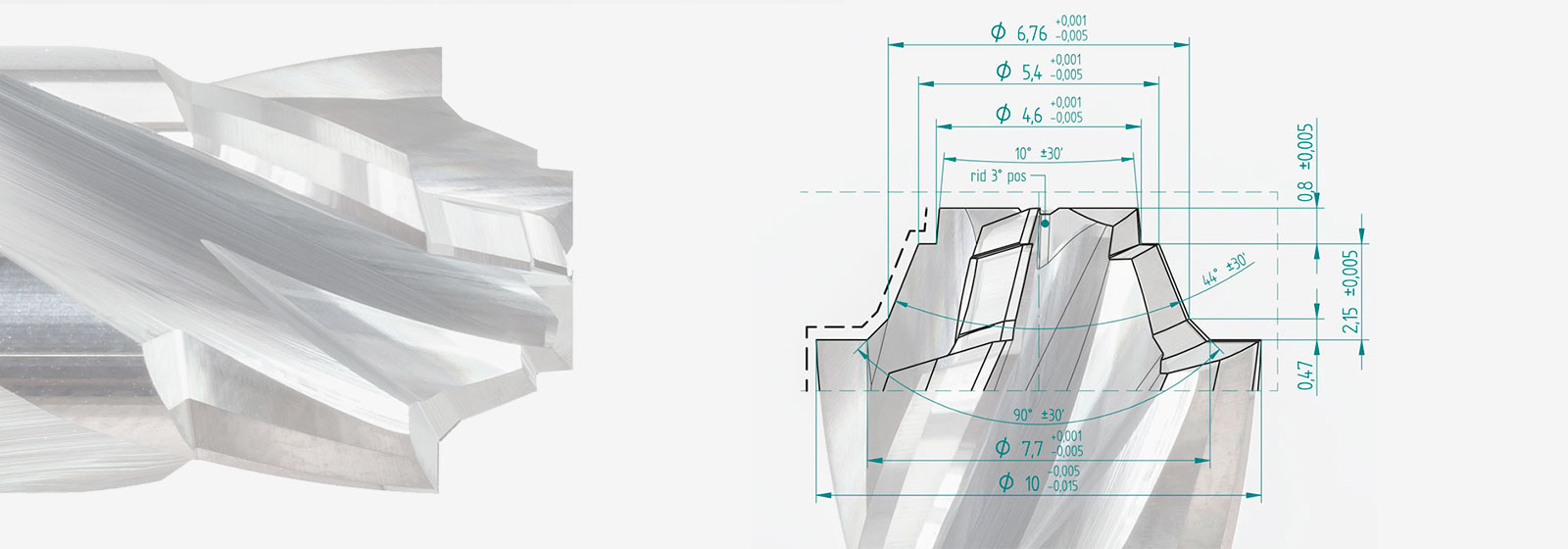
- Center Cutting: The cutter must be able to drill (center cutting) or be specifically designed for plunge milling with mainly front cutting edges and minimal side cutting.
- Geometry: A 90° lead angle is standard, but High Feed inserts or cutters used in plunge milling reduce the radial force component even further.
How can vibration be avoided during plunge milling of hard materials?
Plunge parameters:
- Lateral Step (ae): Step-over should not exceed 20-30% of diameter if lateral deflection from the residual material core is to be avoided.
- Retract: Move the tool about 0.5 mm away from the wall before rapid retraction to avoid rubbing the machined surface and leaving marks.