
How can consistent accuracy be achieved in microholes?
Repeatability in micro-holes depends on the thermal chain and centering. A common mistake is to neglect Z-axis thermal expansion: on a 3 mm deep blind hole, 0.05 mm of thermal growth changes the functional tolerance. Constant accuracy requires frequent probing cycles and the use of “short and rigid” pilot drills that create a perfect guide, effectively a virtual bushing, for the long drill.
Which micro drill should be selected for microdrilling hard steels?
Microdrill selection:
- Carbide: Ultra-fine grain (< 0.5 µm) so the cutting edge is geometrically well-defined rather than granular.
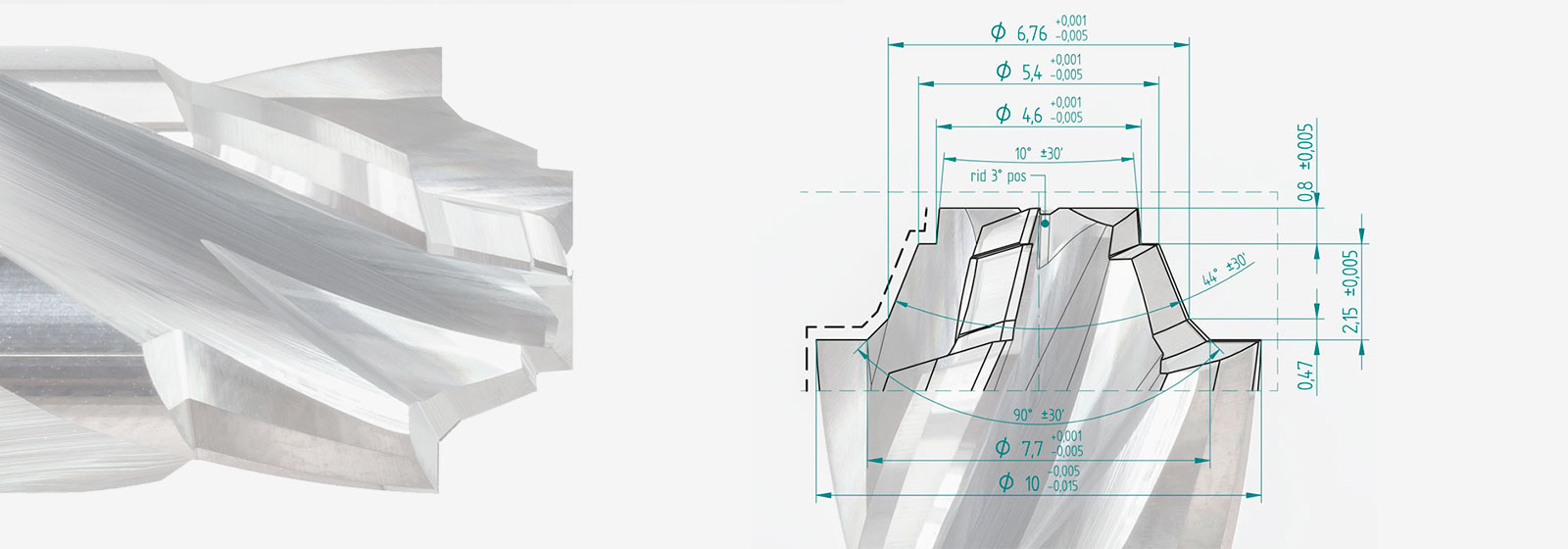
- Geometry: For high accuracy, flat-bottom drills or drills with double-margin guidance provide better cylindricity.
How can micro-drill breakage be avoided during microdrilling?
Avoid breakage and scrap:
- Coolant Filtration: In micromachining, a dirt particle can block a 0.1 mm coolant channel, causing immediate overheating failure. Filtration to 5 microns is recommended.
- Power Monitoring: Use spindle-load monitoring systems to detect micro-chipping before catastrophic breakage.
Which parameters improve stability and accuracy in microholes?
Stability parameters:
- RPM: High but not excessive, to avoid harmonic vibration.
- Feed: Constant.
- Strategy: Pilot (1-2xD) -> deep drilling. Never enter the pilot hole at maximum rpm; enter at zero or low rpm, then activate spindle and coolant.