
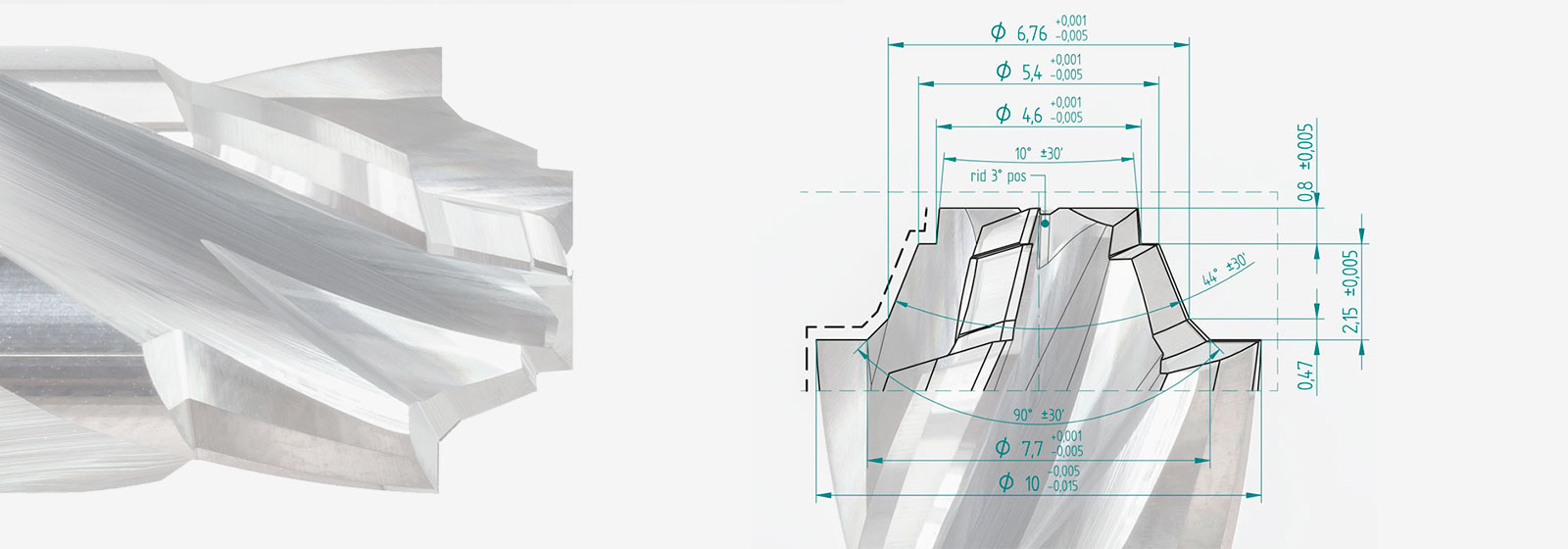
How can cobalt-chromium be machined without vibration?
Cobalt-Chrome (CoCr) is known for being abrasive, hard, and prone to vibration because of its high elastic modulus. It is widely used in dental and medical applications. Machining it without vibration requires an extremely rigid setup and tools with vibration-damping geometry. The material must be engaged positively: a “light” cut often slides and triggers resonance, while a decisive cut stabilizes the system.
What are the main causes of vibration in CNC milling?
The causes are:
- Hot Hardness: CoCr retains hardness at high temperature.
- Abrasiveness: It quickly wears sharp edges, progressively increasing cutting forces.
- Structure: It tends to generate segmented chips that cause force fluctuations.
How can chatter be reduced by increasing tool rigidity and stability?
To reduce chatter:
- Short Tool: Minimum stick-out.
- Holder: Perfect balance and strong clamping (HSK).
- Damping: Tools with heavy-metal shanks or strongly variable-pitch geometries.
Which cutting parameters help eliminate vibration during machining?
“Kill-Vibration” parameters:
- Vc: Low (40-60 m/min).
- fz: Medium-high.
- Strategy: Dynamic milling with constant, low radial engagement. This reduces radial deflection force on the tool.