
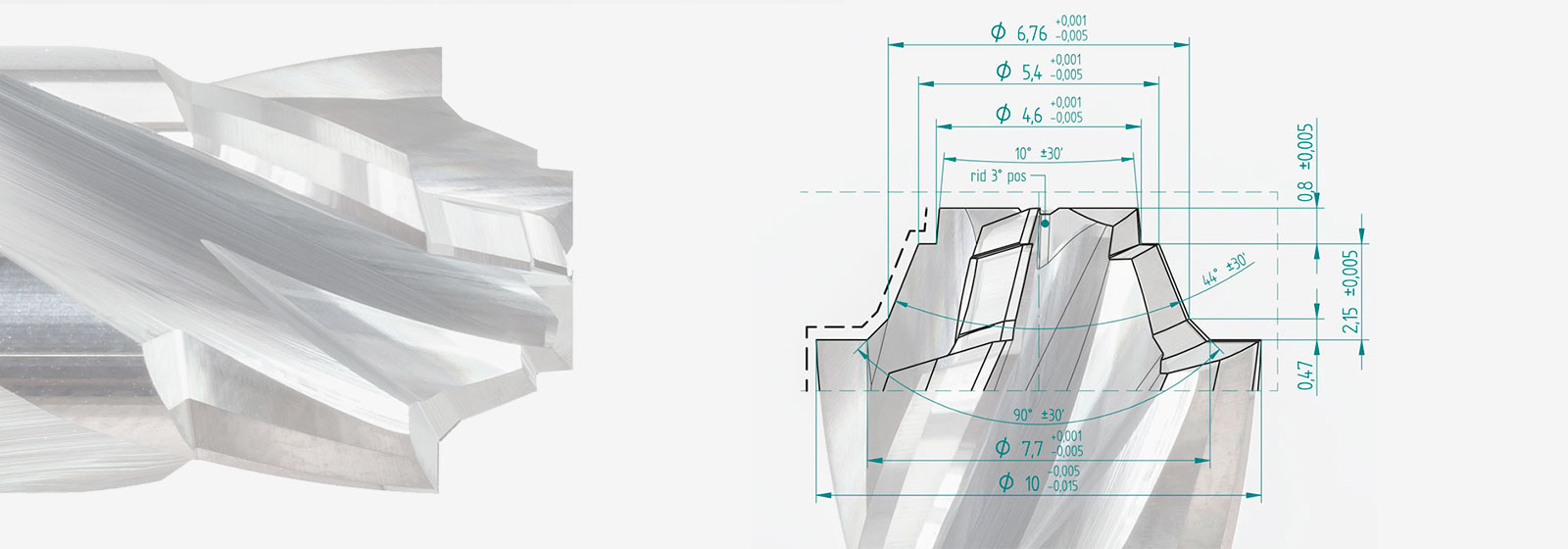
How can tool life be improved on hard steels?
On hard steels (45-65 HRC), tool life depends on heat management and resistance to abrasive wear. The winning strategy is Hard Milling: dry cutting (or air) to avoid thermal shocks that would fracture carbide, high cutting speeds to plasticize the chip, and reduced feed to minimize mechanical load on the cutting edge.
Which coatings increase tool life on hard steels?
“Hard” coatings:
- TiSiN / AlTiSiN: The addition of silicon creates a very hard nanocomposite structure with oxidation resistance up to 1100°C.
- Thickness: Thin but tough coatings.
- Adhesion: Essential so that the coating does not peel under pressure.
How should tool geometry be selected for hardened steels?
Geometry for high HRC:
- Negative Rake Angle: Or neutral, to reinforce the cutting edge.
- Number of Flutes: High (4, 6 or more) for a robust core.
- Radius: Corner-radius or ball-nose cutters last much longer than square-end cutters because the sharp corner fails quickly.
Which parameters reduce wear when machining hard steels?
Tool-saving parameters:
- Vc: 100-150 m/min (depending on exact hardness).
- fz: Low (0.01-0.03 mm).
- Toolpath: Soft entries (ramp/helix), never plunge. Keep the tool engaged as continuously as possible to avoid impact.