
How can stable microholes be produced in hard steels?
Microdrilling (Ø < 1 mm) in hardened steels (> 50 HRC) is a stability challenge. The microdrill bends under very small loads (buckling). Stability is achieved by eliminating any run-out error (target < 2 microns) and using micrograin carbide drills specifically designed for hard materials (Hard Drilling), with a reinforced core. The stronger core reduces chip space, so chip evacuation must be carefully managed.
Which micro drill should be selected for microdrilling hard steels?
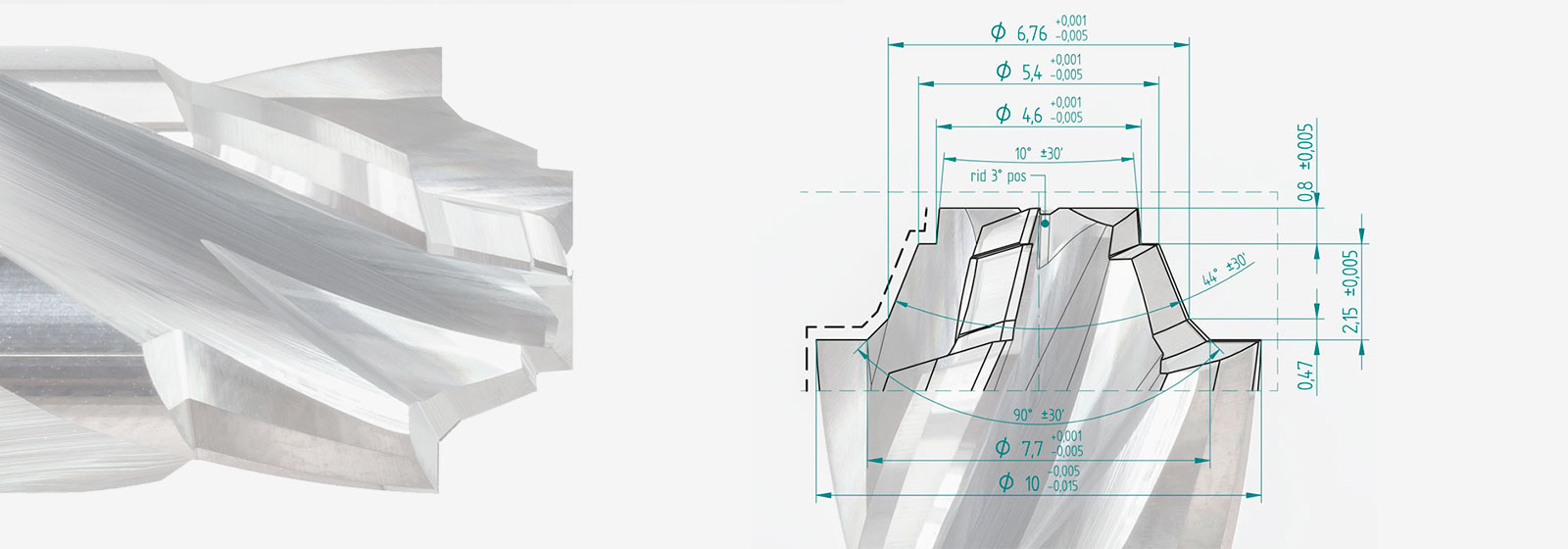
The hard-material microdrill:
- Point Angle: Often 135° or 140°.
- Coating: TiSiN or AlTiSiN resistant to red heat.
- Shank Tolerance: h4 or h5 for perfect fit in hydraulic or shrink-fit holders.
How can micro-drill breakage be avoided during microdrilling?
Immediate breakage? Main causes:
- Run-out: Even 5 microns of error makes the drill rotate off-axis, causing immediate cyclic-fatigue failure at entry.
- Impact: Entry must be gentle. Reduce entry feed.
Which parameters improve stability and accuracy in microholes?
Hard-drilling process:
- No Deep Pecking: At high HRC, traditional pecking chips the cutting edges. Prefer continuous drilling for limited depths or “micro-pecking” that only breaks the chip without fully retracting.
- Pilot Hole: Mandatory for holes > 5-6xD. The pilot must have a point angle > greater than the long drill (e.g. 140° pilot, 135° long drill) so the margins do not contact before the tip.