
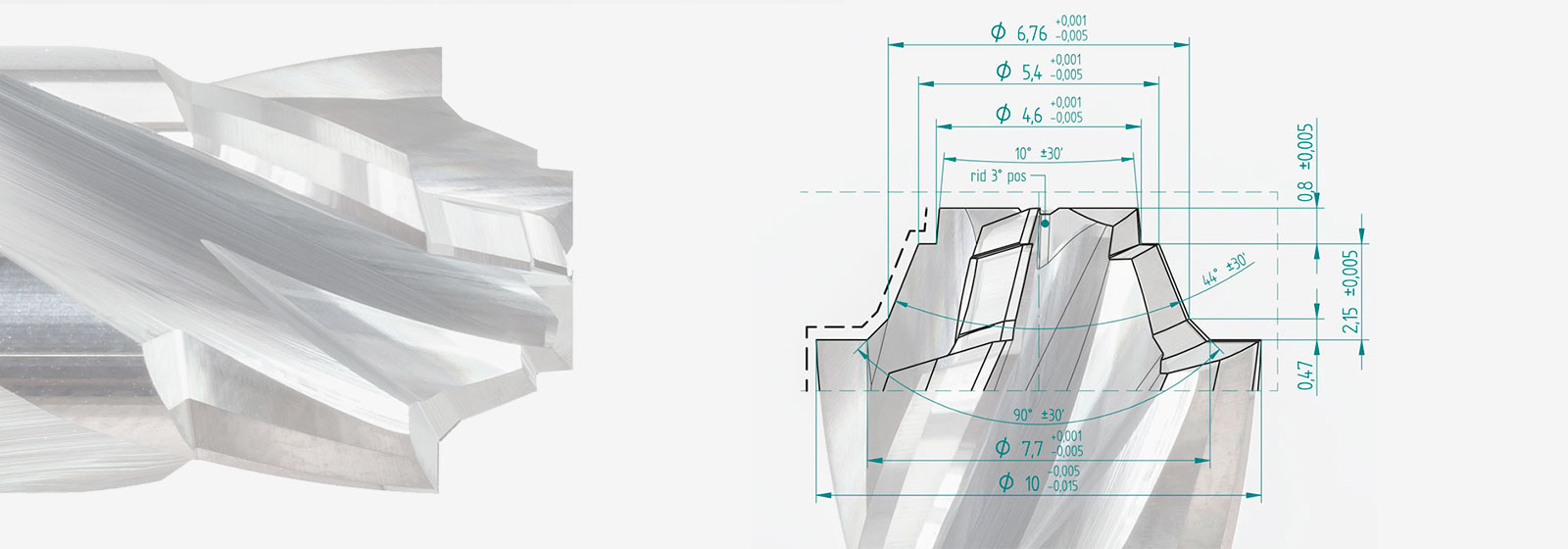
How can a clean cut be achieved in engineering plastics?
Machining engineering plastics (PEEK, POM, Nylon, PTFE) requires extremely sharp tools to avoid two opposite problems: melting of the material if friction is high, or chipping if the tool tears instead of slicing. Mirror-polished single-flute O-Flute cutters are used because they provide very large chip space and an extremely positive cutting angle that slices the plastic without heating it.
Which end mill should be used for a clean cut in engineering plastics?
Cutter for plastics:
- Single Flute: Ideal because it reduces heat (only one cut per revolution) and allows immediate chip evacuation.
- Polishing: Flutes should be mirror polished to prevent plastic chips, which are often electrostatic, from sticking.
- Edge: Razor sharp. Thick coatings such as TiAlN round the edge too much; uncoated tools or a very thin DLC coating are preferable.
How can burrs and melting be avoided when machining engineering plastics?
Avoiding burrs and melting:
- Melting: Caused by excessive Vc or poor chip evacuation. Plastics conduct heat poorly, so heat remains in the cutting zone and melts the workpiece.
- Burrs: Often caused by worn tools or incorrect exit strategies.
- Clamping: Take care not to deform the workpiece during clamping, because plastics are elastic.
Which milling parameters are recommended for engineering plastics?
Parameters for engineering plastics:
- Vc: High, 300-600 m/min. The cut must be fast and clean.
- fz: Assertive, 0.05-0.15 mm/tooth. Too low a feed generates friction and melts the material instead of cutting it.
- Coolant: Compressed air or MQL. Emulsion should be avoided on PEEK and polycarbonate, which can absorb it or craze.
- Gummy materials (PTFE, Nylon): Reduce Vc by 30% and increase fz, so the chip is sheared rather than rubbed.